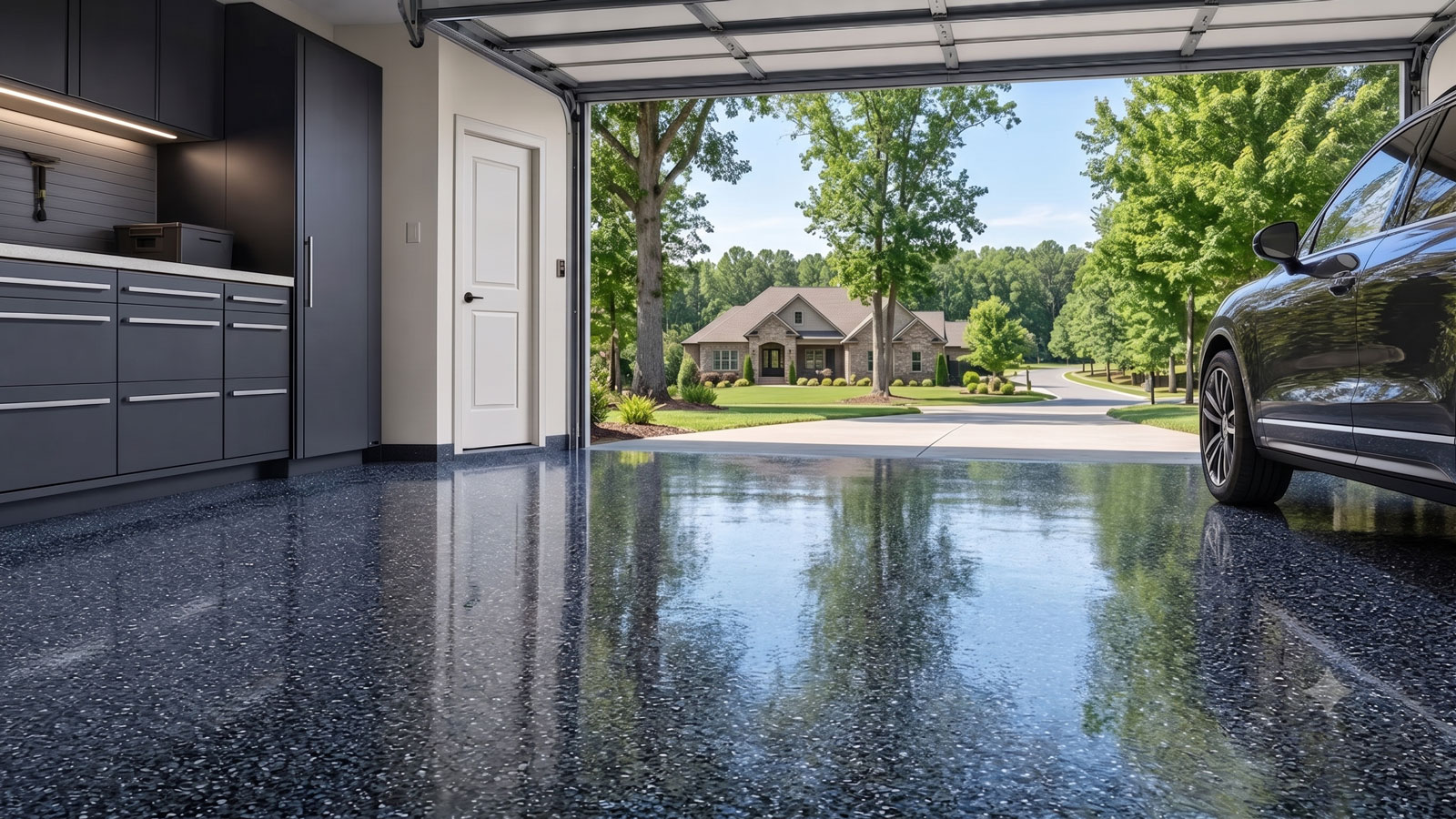
Garage Floor Coating in Dayton, OH
Explore epoxy, polyaspartic and decorative-flake garage floor coating options for Dayton homes. Compare preparation, finish choices and contractor estimates.
Floor Coating Services in Dayton, Ohio
A garage floor coating project in Dayton should begin with the condition of older detached and later attached garages. Dayton's winter-response plan covers approximately 1,700 lane-miles of streets. That is meaningful context for winter road residue, but it does not establish salt damage in any particular garage. A contractor should identify paint, sealers, stains, cracks and repair areas before selecting a resin system.
The city ranks major roads and routes near schools and hospitals ahead of residential streets. Its plan calls for residential street treatment at four inches of snowfall or more. Vehicles can carry slush, grit and deicing residue inside, particularly after repeated winter trips. Snowmelt gathering under a car differs from persistent moisture at a slab edge or water coming under the garage door during rain. Those conditions call for different assessments and should not be treated as interchangeable.
City ordinances also address the disposal of snow from private property and sidewalk maintenance. This describes the community rather than a private slab. In older detached and later attached garages, age and appearance are not reliable substitutes for examining concrete soundness, previous coating work, joints and contamination. Compare preparation, finish texture, curing time and parking arrangements before deciding between epoxy and polyaspartic systems.
Local Market Insight
The city ranks major roads and routes near schools and hospitals ahead of residential streets. City ordinances also address the disposal of snow from private property and sidewalk maintenance. These are useful local facts for discussing parking needs across established city neighborhoods, but neither establishes the condition of a homeowner's concrete or a need for a particular product.
What Affects the Cost of Garage Floor Coating in Dayton?
Even at the same size, Dayton garage floors can need different work. Where old paint, patchwork concrete and access around wall storage is actually found, removal, grinding, crack repair and surface correction may affect labor. A written quote should distinguish observed preparation from optional finish upgrades.
Parking needs involving parking needs across established city neighborhoods may also affect timing. Discuss equipment access, storage, topcoat texture and the safe return-to-vehicle interval rather than assuming every project can follow the same schedule.
- Previous concrete finishes: A garage in older detached and later attached garages may have bare concrete, paint, old epoxy or a sealer. The installer should identify actual coatings and explain suitable removal and grinding before promising adhesion.
- Winter residue and cleaning: Dayton's winter-response plan covers approximately 1,700 lane-miles of streets. Road treatments can reach garage floors on vehicles, but existing salt and grime must be inspected and cleaned based on the slab rather than assumed from municipal records.
- Concrete defects: Where old paint, patchwork concrete and access around wall storage is found, specify which cracks, joints or patches require treatment. A coating does not stop structural movement; serious deterioration requires appropriate assessment before cosmetic work.
- Doorway runoff: Water from a wet vehicle is different from storm runoff crossing a driveway edge. Check the garage-door seal, slope, and lasting dampness before choosing any coating system.
- Garage configuration: Steps, cabinets, walls, drains and stored equipment complicate work beyond the square footage. Include the cost of accessing edges and protecting fixtures in the estimate.
- Appearance and downtime: Color, flake coverage, topcoat texture and curing affect the price. For parking needs across established city neighborhoods, arrange alternative parking and ask when tires can safely return to the finished surface.
Call for a clear, project-specific estimate — or request one online.
Dayton Winter Streets and Practical Floor Care
Dayton's winter-response plan covers approximately 1,700 lane-miles of streets. The city ranks major roads and routes near schools and hospitals ahead of residential streets. Those city-specific policies make roadway grit and winter salt plausible concerns for a garage homeowner. They do not tell anyone the amount of residue on a given slab. An inspection must distinguish an actually contaminated surface from bare concrete that simply sees normal winter traffic.
Its plan calls for residential street treatment at four inches of snowfall or more. After a snowy trip, water and grit can accumulate around a parked car's tire positions. A professionally prepared coated floor can be easier to clean than porous concrete, but it will not prevent tracked-in moisture. Sweep grit and handle puddles promptly, and discuss traction with the installer before choosing a smooth or textured finish.
In Dayton, parking needs across established city neighborhoods can make the difference between ordinary winter tracking and a schedule or access problem. Check whether wetness occurs only after vehicles arrive or also during rain with the garage empty. Inspect the door seal, approach grade and previous coating condition before deciding what the concrete needs.
Understanding Dayton Garage Concrete Before Installation
City ordinances also address the disposal of snow from private property and sidewalk maintenance. Population or housing statistics help describe the local market but not the construction date or integrity of a private garage slab. In older detached and later attached garages, additions or replacements can create concrete quite different from the rest of a property. Estimate quality depends on examining the actual floor, not on broad neighborhood assumptions.
Inspection should look for old paint, patchwork concrete and access around wall storage, oil, previous paint, sealers, weak patches, pitting and active joints. The installer ought to describe mechanical profiling and specify how cracks and old coatings will be addressed. When different parts of a garage were poured or finished at different times, surface preparation may require more than one treatment.
A older detached and later attached garages should also be checked at the driveway connection. During rain, follow the direction of actual water rather than inferring problems from nearby roads, streams or drains. Where persistent dampness, failed coatings or exterior runoff are observed, address those conditions before installing a system that requires dry, stable, prepared concrete.
- Identify previous paint, epoxy and sealers.
- Inspect cracks, patches and moving joints.
- Observe runoff at the garage threshold.
- Discuss traction and cleaning for winter use.
- Clear access to steps, walls and drains.
- Confirm the cure and return-to-parking schedule.
Frequently Asked Questions
What does Dayton's winter street program mean for coatings?
Dayton's winter-response plan covers approximately 1,700 lane-miles of streets. That makes road grit and salt worth discussing, but it does not prove damage or contamination on a specific slab. Evaluate actual residues and explain cleaning and grinding.
Can I coat concrete in an older Dayton home?
Yes, if the concrete is sound and properly prepared. In older detached and later attached garages, the slab might have been repoured or painted long after the house was built. Check old paint, patchwork concrete and access around wall storage and moisture before choosing materials.
What should Dayton residents know about residential-street snow treatment?
Dayton's published plan gives highways and major corridors priority, with residential streets generally treated once accumulation reaches four inches. When planning garage work, expect variable winter parking demands and evaluate the actual floor residue instead of assuming uniform treatment.
Is epoxy or polyaspartic better for Dayton?
The best choice for Dayton depends on slab condition, preparation, finish texture and curing conditions. Dayton's winter-response plan covers approximately 1,700 lane-miles of streets. That makes winter cleaning relevant, but neither coating type is an automatic winner.
What should I specify when seeking Dayton estimates?
Ask about old paint, patchwork concrete and access around wall storage if present, grinding, joints and cure time. The city ranks major roads and routes near schools and hospitals ahead of residential streets. That provides local scheduling context, not a diagnosis of your garage floor.